h1

Fourcast! 32: Yotsuba&! and Gotham Knights

February 8th, 2010 Posted by david brothers

-Gavin read President Evil for some strange reason.
-6th Sense’s 4a.m. Instrumental for the theme music
-I made Esther read the first volume of Yotsuba&!.
-She made me read Devin Grayson’s run on Gotham Knights.
-Then we fought to the death!

Subscribe to the Fourcast! via:
-Podcast Alley feed!
-RSS feed via Feedburner
-iTunes Store

 
icon for podpress  Fourcast! 32: Yotsuba&! and Gotham Knights [35:59m]: Play Now | Play in Popup | Download

Post to Twitter Post to Delicious Post to Digg Post to Facebook Post to Reddit Post to StumbleUpon

Related posts

h1

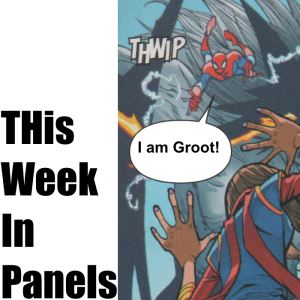
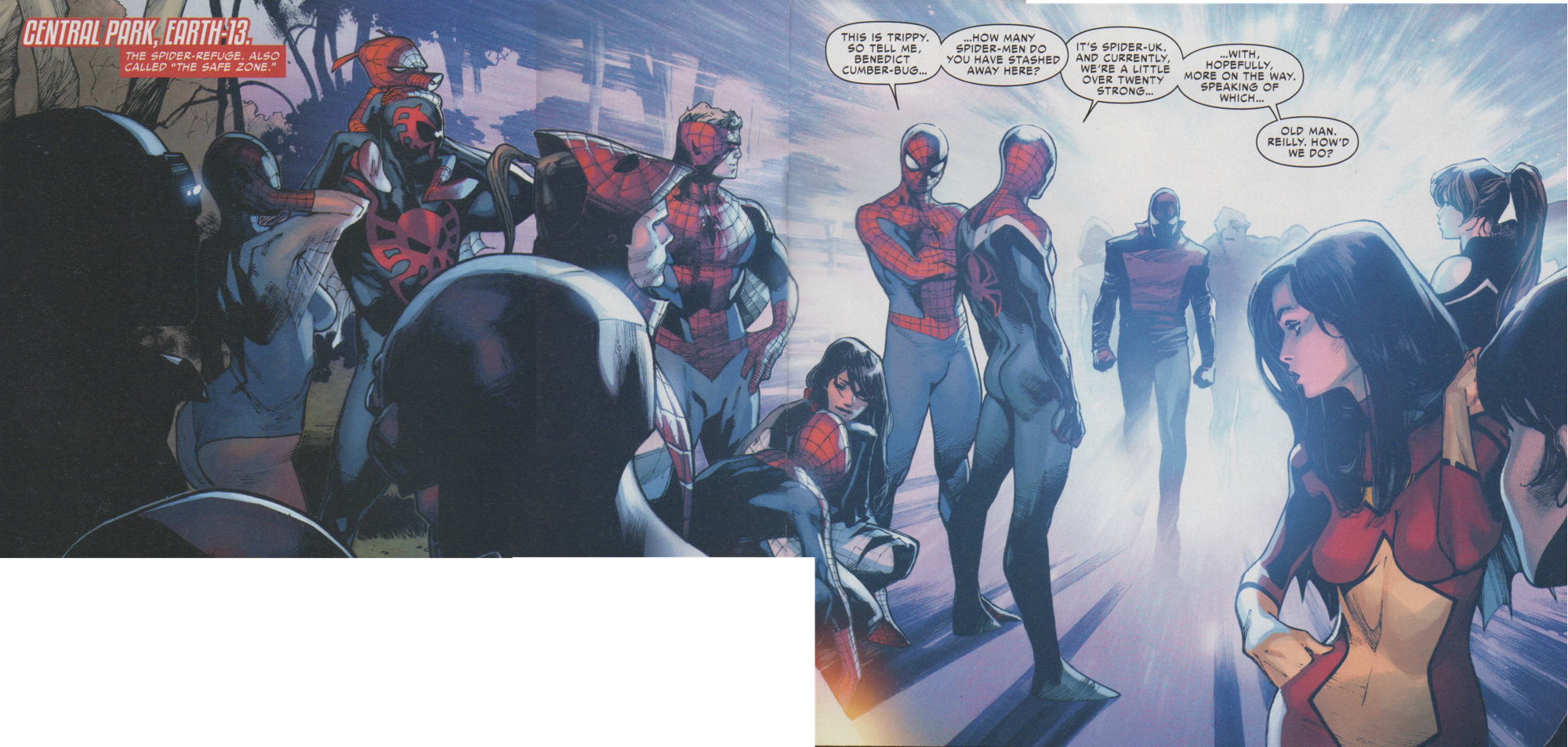
This Week in Panels: Week 20

February 7th, 2010 Posted by Gavok

Well, it’s Sunday night and we’re ready to strike!
Our special forces are in for a fight!
With heroes in the air and zombies on the ground!
This Week in Panels is takin’ over the town!
We gotta get ready! We gotta get right!
There’s gonna be some comic art at 4th Letter tonight!

So get ready…
I MEAN, get ready…
ARE YOU READY FOR SOME PANELS?!
A COMIC BOOK INVASION!

This week I’m going against my rule of never using a final, or even last-page, panel for this. Why? Because that Deadpool Team-Up panel completely sums up the entirety of that issue and why Stuart Moore wrote it in the first place.

Batman Confidential #41
Sam Kieth

Blackest Night: Wonder Woman #3
Greg Rucka and Nicola Scott

Read the rest of this entry »

Post to Twitter Post to Delicious Post to Digg Post to Facebook Post to Reddit Post to StumbleUpon

Related posts

h1

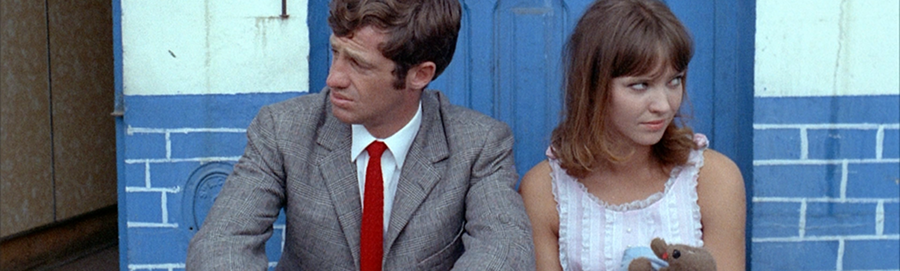
Black Future Month ‘10: Paris/Tokyo

February 6th, 2010 Posted by david brothers


The easiest thing to point to when someone says “What’s cultural appropriation?” (in the unlikely event that somebody actually wants to know the answer to that question) is the theft of rock and roll. ego trip’s Big Book of Racism!, in addition to being an incredible read, has a great series of lists about rock and roll and race. Long story short, of course, cultural appropriation is the act of taking something that “belongs” to one culture–be it music, arts, literature, drama, whatever–and taking it for your own.

It isn’t a focused movement, exactly. There are no malicious men sitting around a table, plotting on how they can steal bachata and make it there own. It tends to be a byproduct of what happens when racism and institutional racism work hand in hand. Taking rock and roll for an (extremely simplified) example– white America in the mid-1900s had no interest in letting black America onto their jukeboxes and into their clubs. However, white musicians performing what was often the exact same music was met with, if not acceptance, something more positive than racially-motivated revulsion. Over time, rock and roll became a “white” genre, something associated with your average run of the mill white people rather than blacks.

Blackface is another example of cultural appropriation, though much more actively racist and malicious. White actors portrayed black characters for the entertainment and edification of a white audience, donning burnt cork and shoe polish and emulating (or just making up) the ways that black people acted.

A more recent example of cultural appropriation are the dozens of kung fu movies starring white guys. Once Hong Kong action cinema proved to be popular in the ’70s, one way of making it even more popular for American audiences was to toss a white guy into the main role. A good example of this is Danny Rand, from Marvel’s Iron Fist. Danny is a rich white guy who ended up in a thinly obfuscated Shangri-La and ended up becoming its greatest warrior, even triumphing over the natives of the city.

In the fall of ‘08, I took a work trip to Tokyo, Japan. I didn’t get as much time to dig in and explore as I wanted, but I did end up spending a lot of time in Shibuya and Harajuku. I saw a lot of people dressed like I dressed, or like people dressed back home. I spent some time in a streetwear shop where the two clerks didn’t know much English beyond “Biggie” and “Nas,” but they knew rap lyrics and fashion.
Read the rest of this entry »

Post to Twitter Post to Delicious Post to Digg Post to Facebook Post to Reddit Post to StumbleUpon

Related posts

h1

The 70’s Spider-Man Song That Will Be Stuck in Your Head for Days!

February 6th, 2010 Posted by Gavok

The other day my old Ultimate Edit writing buddy ManiacClown sent me these old superhero radio drama albums from decades ago, including a Justice League record from the 60’s where during roll call they break into a Rat Pack musical number.

One of the albums is from the 70’s, starring Spider-Man in what they call a “Rockomic”. It’s a story involving Peter Parker being blackmailed by the Kingpin into trying to kill Spider-Man, with Spider-Man talking like Jon Lovitz as Master Thespian. It also starts off with a completely trippy nightmare sequence that sounds like Peter’s having a bad acid trip. In-between the acts of the story they would toss in some musical tracks that are without a doubt from the 1970’s. Most of them are awful, but the main theme is a special kind of awful that keeps drawing me back in for repeated listens.

And now, little man, I give the watch to you…

Get the Flash Player to see the wordTube Media Player.

He’s no one woman’s sex machine, you know. The Devil saw to that.

Post to Twitter Post to Delicious Post to Digg Post to Facebook Post to Reddit Post to StumbleUpon

Related posts

h1

Puffy is Good, but Milestone Is Forever

February 5th, 2010 Posted by david brothers

I wrote a bit about Milestone Media in honor of the release of Milestone Forever #1 this week. It’s a brief history and essay on its impact, a lot of which gets forgotten nowadays.

A brief excerpt:

Oh, you knew it was coming, didn’t you? It’s Black History Month, baby, pay attention!

Milestone was never the “black” comics company. Its creators, like its characters, were a multicultural blend of various races and ethnicities. It stands to reason that when your company is composed of a variety of types of people that your books will reflect that reality, doesn’t it?

In the case of Milestone’s comics, that is definitely true. “Blood Syndicate”’s cast was composed of black, white, Chinese, Korean, canine, Latino, and alien characters. In fact, in a move that is still amazingly rare, “Blood Syndicate” featured Latino characters of different Latin ethnicities. A Puerto Rican, a Dominican, and a Salvadoran in the same book? That’s incredible, because most companies just stop at “Generic Hispanic Character.”

It’s nice that mainstream comics are making a play at paying attention to people who aren’t white dudes again, but don’t forget that before Batwoman, before Steph Brown, before Jaime Reyes, and before Luke Cage was on the Avengers, there was Milestone. Give credit where it’s due. Pay attention.

There’s this Malcolm X quote I like. He said, “You can’t drive a knife into a man’s back nine inches, pull it out six inches, and call it progress.” If you’re doing something now that isn’t as forward-thinking (or equal, or normal, or whatever) as seventeen years ago? That ain’t progress, doggie. That’s playing catchup to everybody else. It’s nice that you’re trying, but either do better or go home. I’m not going to congratulate you for finally doing what you’re supposed to have been doing for decades. That’s like congratulating parents for paying their rent. Newsflash: you’re supposed to be doing that.

And that’s about as negative as I’m willing to get over race & comics this month. I’m tired of fighting.

Go give that post a read. Denys Cowan comments below and he dug it, which basically made my day.

Post to Twitter Post to Delicious Post to Digg Post to Facebook Post to Reddit Post to StumbleUpon

Related posts

h1

Young Justice League Animated Series

February 5th, 2010 Posted by Esther Inglis-Arkell

Hunh.

With this little information, I can’t say much, except that I hope it will be more Young Justice and less Justice League.  I loved the Justice League and Justice League Unlimited series. 

I just really don’t want to see The Justice League, Only They’re TeenagersYoung Justicehad its own feel and its own cast  (the fact that Arrowette is on the show is a good sign).  I hope that they’re not going to shove adult heroes into teenage roles.

Okay, enough about what I hope it’s not.  Here’s what I hope it is.  I hope that they have the dorky-as-hell Superboy.  He was fun and shallow, but also very sweet, with a poignant back story.  I hope that they include both Cassie and Cissie, and that they’re friends all the way through.

And I hope that they have the adult superheroes in the show, just as they were in the comic; stepping in and annoying all the kids.  Young Justice wasn’t just a series about a team of kids.  It was a series about a team of kids who were rebelling, and challenging, and clinging to, and thinking about, and testing the grown-ups in their lives.  That was part of what made it fun and poignant.  If it’s just a bunch of kids fighting monsters, it would just be like Teen Titans Go!

Oh, and I hope they have the supercycle.

Post to Twitter Post to Delicious Post to Digg Post to Facebook Post to Reddit Post to StumbleUpon

Related posts

h1

Black Future Month ‘10: Ron “D-pi” Wimberly

February 4th, 2010 Posted by david brothers


I’m hoping to make a few interviews a weekly part of Black Future Month ‘10. I thought about doing the usual rigamarole–”How you doing, how’s it feel to be a black artist in the predominately white comics industry, have you ever been a victim of racism, have you ever been shot, so whatchu think about Obama?”–but I’m having trouble thinking of anything more boring/depressing/terrible. Why interview anyone if you’re going to ask them the same old questions?

Instead, I want to focus on the work. These cats are people who you should be watching out for. This isn’t a comprehensive list, obviously, just a few people whose work I dig and who deserve your attention. Given enough time and knowledge, I’d hit up everyone I ever liked for interviews.

My (loose) plan is to follow each interview up with a piece that is related in some way. The first of those hits on Saturday. It may provide some continuity, it may not, who knows.

First up is Ron “D-pi” Wimberly, artist of Sentences and several other works. Check out his DeviantArt and website. All art is, I assume, copyright to him.


I think the first work of yours I saw were the covers for Vertigo’s old Hellblazer: Papa Midnite miniseries. You’ve done work on a few other books for Vertigo, including an OGN, and you’re working on Gratuitous NInja, too. When you add in the magazine work, you’re wearing a lot of hats when it comes to art. Why such a diverse body of work? Is it so you can flex different artistic muscles?

I get bored easily. That’s the long and short of it. I also have alot of ideas. Usually if I am working on an idea I didn’t come up with I am a little unhappy as well, so I have to get my kicks somewhere else. I’m just trying to make great work and be happy. I hope that doesn’t make me too difficult to work with.

I like hats.

Another thing is I gotta eat. 

I want to talk about Gratuitous Ninja for a minute. Its title describes the series perfectly, but where did the series come from? Was it something you did on a lark one day and kept up with or was it more planned out than that?

Gratuitous Ninja started in the Static Fish, Pratt University’s Student Comic Magazine. We had a talented group of contributers on that run, cats that are really ill, of whom you may or may not know. Raphael Tanghal, Ted Lange, Dan James- really talented individuals came together on these books. I was fortunate to be a part of it.

I always loved Ninja. GratNin was originally a love letter to one of the great loves of my life. A woman I met in college. The original run of GratNin is a silent comic wherein a kunoichi saves this shinobimono from the belly of a walking prison. It’s also a love letter of sorts to Moebius, the original that is, the latest rendition not so much.

You probably can still order the reprint of the book online. It was called the Ninjaversary and it featured pin ups by Tanghal, LeSean Thomas and even a collabo with Aerosyn Lex from the KDU

GratNin: Loan Sharks is the latest volume of Gratuitous Ninja and is running weekly on your site right now. I get a real Jet Set Radio feel from it, with the mixing of Japanese aesthetics and mythology and American storytelling, particularly when combined with the addition of real youth culture- something that crosses color lines and and country borders. How’d you develop this style? Is it a synthesis of things you’re into or did it spring fully-formed from your head?

Yeah… uh… weekly.

…the answer to your questions is, “Yes”

I love jidaigeki, chambara and I am a city kid transplanted into the suburban wasteland. The style is born from my experience.

Illumination via juxtaposition. 
Read the rest of this entry »

Post to Twitter Post to Delicious Post to Digg Post to Facebook Post to Reddit Post to StumbleUpon

Related posts

h1

Location, Location, Location

February 3rd, 2010 Posted by Esther Inglis-Arkell

Spoilers for the latest issue of Red Robin.

Read the rest of this entry »

Post to Twitter Post to Delicious Post to Digg Post to Facebook Post to Reddit Post to StumbleUpon

Related posts

h1

Black Future Month ‘10: Proclamation

February 2nd, 2010 Posted by david brothers

“It is what it is” is a phrase that signifies resignation or a grudging acceptance of a situation. It’s not admitting defeat, not exactly. Really, it means exactly what it says. Whatever situation you’re in is whatever situation you’re in. You can’t change the past and you can’t change the present. All you can do is live in it. Fantasy only goes so far, and “so far” in this equation is “nowhere.”

I read a story in a comics anthology a few weeks back that really surprised me. It’s short, just seven pages, but it bounced around in my head for days after I finished it. In it, a man named Tarlton is in charge of inspecting the robotic citizens of Cybrinia to see if they are ready to be accepted into the Galactic Republic.

He meets an orange robot soon after landing on the planet, and this robot serves as his guide around the planet. Tarlton is shown their factories, their system of government, their educational system, and their technology. He asks about the blue robots, and is told that they live on the south side of the city.

Tarlton learns that the citizens have self-segregated, with the orange robots living in relative opulence, while the blue robots must live a harder life. He visits a blue factory and notices that the blue robots have the same innards as the orange robots. His orange guide bristles at Tarlton’s anger. “You are lecturing me as though all this were my fault, Tarlton! This existed long before I was made! What can I do about it? I’m only one robot!”

Tarlton storms out of the factory and back to his ship. He explains that the robots are on their own until they learn to live together in harmony, and that they won’t see real progress until they do so. He climbs back inside his ship, bids his guide farewell, and lifts off. Inside the safe atmosphere of his ship, he removes his helmet, and the narration describes how the instrument lights make the “beads of perspiration on his dark skin twinkle like distant stars.”

Pretty simple, right? Maybe a little ham-fisted in its use of metaphor, but it has a good message at its heart. The thing is, Al Feldstein wrote it and Joe Orlando drew it in 1953 for EC Comics. They named it Judgment Day. Thirty years after that, Guy Bluford became the first black American in space. Twenty-five years after that, Barack Obama became the first black president.

What struck me was how similar the moral of Judgment Day is to the way race is treated in modern day superhero comics. Like the story set in the far-flung future, superheroes exist in a world where acceptance is the default. The X-Men, long-time stand-ins for various peoples, are indistinguishable from the population at large. They only encounter racism in stories specifically geared to show that racism is something bad people do.

Most black superheroes, the ones worth reading about, at least, pay lip service to the idea of race. They tend to have “Fight the power!” motivations, embody the “angry black man” stereotype, or both. They fight racists disproportionately often when compared to their white compatriots. Their motivations might not be as pure as their brethren.

Some black characters, like John Stewart or James Rhodes, are permanent sidekicks. They aren’t as popular as their white counterparts and never manage to rise above their sidekick status. If they weren’t fictional, you could say that they never manage to self-actualize, no matter how many times they fall out with their benefactors.

Others, like Luke Cage or Misty Knight, are their own characters, but that proves to be their doom. Without some kind of tie to another franchise, they can’t keep their head above water. They are guest stars and cameos, showing up when someone needs a crowd shot or a reference to a character’s friends.

There are a number of reasons why this tends to hold true for so many characters, but that’s not the point today. The point is that today, almost sixty years after Judgment Day told us that racial unity is the future, superhero comics are still singing that same song.

We don’t see the nuances or cultural traits that combine to define a race. We don’t see how the races interact and intersect. In superhero books, race, and everything to do with it, is a binary construct. Villains can be racist, heroes are not. Black characters are unquestionably accepted and called equals, even if the story or art suggests otherwise.

Race is not, and has never been, as simple as black and white. People aren’t that simple. That’s just not how it works.

There’re three bars from a Saul Williams song called “Coded Language” that are applicable here.

Your current frequencies of understanding outweigh that which as been given for you to understand.
The current standard is the equivalent of an adolescent restricted to the diet of an infant.
The rapidly changing body would acquire dysfunctional and deformative symptoms and could not properly mature on a diet of applesauce and crushed pears.

Judgment Day was controversial in 1954, when it was reprinted in Incredible Science Fiction #33. The Comics Code Authority wanted the race of the astronaut changed to white. William Gaines, publisher of EC Comics, stuck to his guns and defied the Code.

It’s 2010. What was controversial then is par for the course today. Interracial relationships are more common than black-on-black relationships in mainstream comics. Captain America’s history bears the specter of experimentation on black men. Luke Cage has been leading the Avengers for a few years. We are standing on the shoulders of giants, looking out at the future, but we’re still eating applesauce.

Of course, applesauce isn’t all we have. There’s a lot to appreciate and a lot to love. I spent a lot of time thinking about BHM10. Several months, in fact. When I sat down to really plan what I wanted to talk about, and how I wanted to talk about it, I was faced with a choice. I can either continue to mourn and wish things were different, or I can accept that it is what it is and move on to the next one. I chose to move on.

Moving on doesn’t mean ignoring the past. Far from it, I think. A few of the essays may cover ground I’ve stomped on before, but hopefully from a fresh angle. I’m gonna talk to people creating the new hotness. I’m gonna talk about black heroes, and yeah, about black superheroes, too. I’m gonna talk about stuff you should be reading and creators you should be watching. I’m looking at three a week, Tuesday-Thursday-Saturday, though that may alter as the month goes on.

This is Black Future Month ‘10. I hope you like it.

Post to Twitter Post to Delicious Post to Digg Post to Facebook Post to Reddit Post to StumbleUpon

Related posts

h1

Black History Month ‘10…

February 1st, 2010 Posted by david brothers

starts tomorrow.

In the meantime, check out Ron Wimberly’s Weekly Inspiration this week, which comes with a Black History theme. Look at the crazy design sense on those issues of The Black Panther.

Weird trivia- the guy who founded the Black Panther Party chapter in Brooklyn in the ’60s? David Brothers.

BHM10 is tomorrow.

Post to Twitter Post to Delicious Post to Digg Post to Facebook Post to Reddit Post to StumbleUpon

Related posts